Q&A with PUR’s CEO Daniel Klier: Why nature-based solutions are moving from “nice to have” to investable climate infrastructure
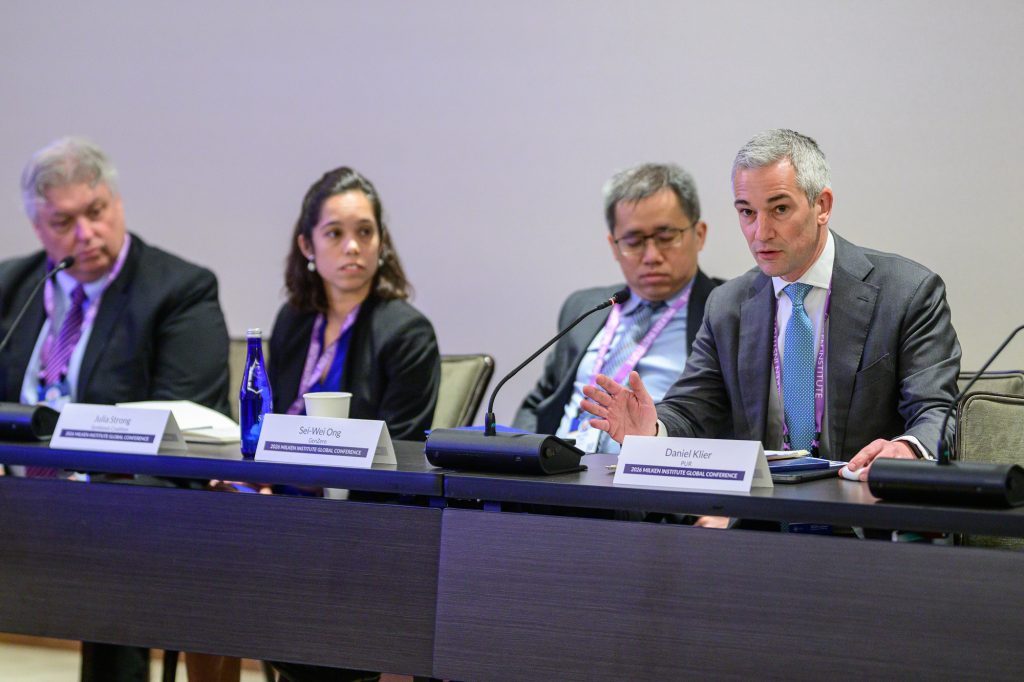
Following his participation in the Milken Institute Global Conference in Los Angeles (“Carbon Markets: Dollars at Work”), PUR CEO Daniel Klier sat down with us to share his takeaways on where carbon markets are heading — and why high-integrity nature-based solutions (NbS) are increasingly being viewed through an investor lens.
With a background spanning sustainable finance and climate markets, Daniel explains why compliance demand is changing the conversation, how insetting is becoming a resilience imperative for global supply chains, and what it will take to scale a market that still suffers from fragmentation and under-funded project development.
What was the main message you wanted to bring to the Milken discussion?
That nature-based solutions are no longer a niche sustainability initiative — they’re becoming part of mainstream climate and business strategy. We’re seeing a growing recognition that well-designed projects can deliver multiple forms of value at the same time: climate mitigation and removals, biodiversity and water outcomes, and — critically — supply chain resilience and farmer livelihoods.
For many companies, climate risk has become business risk. In sectors like coffee and cocoa, rising temperatures, water stress and soil degradation directly threaten productivity and sourcing security. That changes the conversation. What started as “carbon programs” increasingly evolves into resilience programs, because protecting ecosystems and supporting farmers is fundamental to protecting long-term supply.
Carbon markets can feel complex. How do you frame them simply?
It helps to distinguish two things.
First, there are allowance-based markets (like emissions trading systems), where companies buy allowances to comply with caps.
Second, there are project-based markets, where companies finance projects that generate credits. Within project-based markets, you then have:
- Voluntary markets, where companies buy credits to complement decarbonisation efforts; and
- Compliance-driven markets, where credits are used under regulatory rules and demand is structurally anchored.
Compliance-driven markets can take different forms — a global mechanism (such as what evolves under Article 6), a sectoral system like CORSIA for aviation, or domestic/regional schemes where a company can use eligible credits as a cost-effective alternative to a tax or allowance.
Within the voluntary space, companies also distinguish between insetting and beyond value chain action — largely based on proximity to the company’s own supply chain.